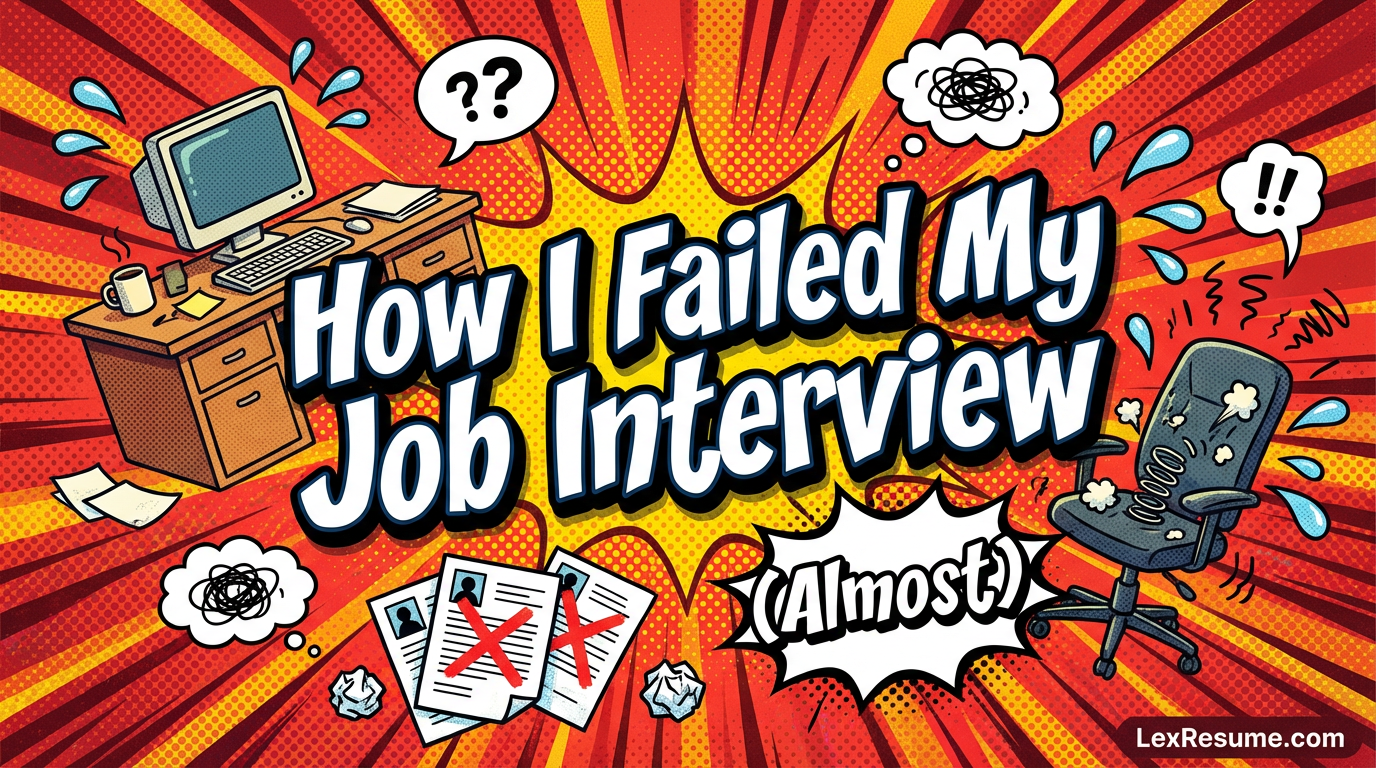
How I Failed My Job Interview (Almost)

A brutally honest guide to surviving job interviews - from awkward silences to accidental oversharing

12 panels 4 min read Interview Tips
How I Failed My Job Interview (Almost)
1
Step 1: Get the interview callback. After 200 applications, the sacred email finally arrives.
THEY WANT TO INTERVIEW ME! I'm basically already hired! ...wait, which company is this again? And what role did I apply for?
How I Failed My Job Interview (Almost) — panel 1
Alex
HALLELUJAH!
2
Step 2: "Research" the company. The night before. At 11:47 PM.
OK so they make... software? Or hardware? Their About page says they're "synergizing paradigm-shifting solutions." I've read it 4 times. I still don't know what they do.
Alex
GOOGLE GOOGLE
3
Step 3: Choose what to wear. It's a startup. Or a bank? The listing didn't say.
Suit? Too formal. Jeans? Too casual. Business casual? What even IS that? I'm wearing a blazer with sneakers. This is either genius or career suicide.
Alex
4
Step 4: "So, tell me about yourself." The interviewer smiles. You panic.
Well, it all started when I was born in 1997... I was a very organized baby. My mom says I color-coded my toys by age 3. In kindergarten I showed strong leadership potential during snack time
...we have 25 minutes left.
How I Failed My Job Interview (Almost) — panel 1
Alex
Interviewer
5
Step 5: "What's your greatest weakness?" Quick, say the thing!
I'm a perfectionist. I just care TOO much about quality. Sometimes I work TOO hard. It's really my biggest flaw, working TOO hard and caring TOO much...
Alex
CRINGE
6
Step 6: "Where do you see yourself in 5 years?"
Honestly? I can't decide what to have for lunch today. But sure, let me map out my entire career trajectory while you judge me in real time. In 5 years I see myself... not doing this.
Alex
...
7
Step 7: "What are your salary expectations?" The trap has been set.
The job listing said:Salary: "Competitive" ?Glassdoor range: $45K - $120KThat's not a range, that's the GRAND CANYON
Uhh... whatever you think is fair? *internal screaming intensifies*
Alex
8
Step 8: "Do you have any questions for us?" You had 10 prepared. You remember zero.
My brain is empty. A complete void. I memorized 10 brilliant questions and I can't recall a single one. I just asked "Do you have snacks in the office?" Why am I like this.
Alex
*crickets*
9
Step 9: Send a professional thank-you email. Simple task. What could go wrong?
"Deer Hiring Manager, Thank you for the opportunity at *wrong company name*..." I just hit send. I CAN'T UNSEND IT. WHY IS THERE NO UNSEND?!
Alex
SENT!
10
Step 10: The verdict arrives.
"Thank you for your interest..."Rambled for 10 minutes about kindergartenUsed the "perfectionist" clichAsked about office snacksSent follow-up to wrong companyMaybe I deserved this one.
I spent 2 hours panicking and 0 hours actually preparing. Maybe THAT'S the problem?
Alex
11
Plot twist: What if you actually prepared properly?
Wait... LexResume analyzes the job description, tells me exactly which skills to highlight, helps me prepare answers that match what the company actually wants, and shows me what the interviewer is really looking for?! WHERE WAS THIS MY WHOLE LIFE?
How I Failed My Job Interview (Almost) — panel 2
Alex
?
12
The next interview - with a LexResume-optimized resume and prepared answers...
I knew exactly what they wanted, matched my experience to their requirements, answered every question with specific examples, AND asked smart questions about the role. The interviewer said: "That's the best answer we've heard all week." I ALMOST CRIED.
How I Failed My Job Interview (Almost) — panel 3
Alex
NAILED IT!

About This Comic

Follow Alex through the most relatable (and cringe-worthy) interview disasters you've ever seen. From blanking on "tell me about yourself" to accidentally emailing the wrong company name, this comic captures every nightmare scenario job seekers dread — and proves that even the worst interviews can have a happy ending if you prepare right. Packed with practical job interview tips, common job interview questions and answers, and real-world examples of what not to do, Alex's story shows why winging it is the fastest way to bomb an interview. Whether it's your first job interview or your fiftieth, the lesson is the same: candidates who research the company, practice their answers, and prepare thoughtful questions consistently outperform those who don't.

Comic Transcript (Full Text)

Panel 1
[Narrator] Step 1: Get the interview callback. After 200 applications, the sacred email finally arrives.
THEY WANT TO INTERVIEW ME! I'm basically already hired! ...wait, which company is this again? And what role did I apply for?
Panel 2
[Narrator] Step 2: "Research" the company. The night before. At 11:47 PM.
OK so they make... software? Or hardware? Their About page says they're "synergizing paradigm-shifting solutions." I've read it 4 times. I still don't know what they do.
Panel 3
[Narrator] Step 3: Choose what to wear. It's a startup. Or a bank? The listing didn't say.
Suit? Too formal. Jeans? Too casual. Business casual? What even IS that? I'm wearing a blazer with sneakers. This is either genius or career suicide.
Panel 4
[Narrator] Step 4: "So, tell me about yourself." The interviewer smiles. You panic.
Well, it all started when I was born in 1997... I was a very organized baby. My mom says I color-coded my toys by age 3. In kindergarten I showed strong leadership potential during snack time
...we have 25 minutes left.
Panel 5
[Narrator] Step 5: "What's your greatest weakness?" Quick, say the thing!
I'm a perfectionist. I just care TOO much about quality. Sometimes I work TOO hard. It's really my biggest flaw, working TOO hard and caring TOO much...
Panel 6
[Narrator] Step 6: "Where do you see yourself in 5 years?"
Honestly? I can't decide what to have for lunch today. But sure, let me map out my entire career trajectory while you judge me in real time. In 5 years I see myself... not doing this.
Panel 7
[Narrator] Step 7: "What are your salary expectations?" The trap has been set.
The job listing said:Salary: "Competitive" ?Glassdoor range: $45K - $120KThat's not a range, that's the GRAND CANYON
Uhh... whatever you think is fair? *internal screaming intensifies*
Panel 8
[Narrator] Step 8: "Do you have any questions for us?" You had 10 prepared. You remember zero.
My brain is empty. A complete void. I memorized 10 brilliant questions and I can't recall a single one. I just asked "Do you have snacks in the office?" Why am I like this.
Panel 9
[Narrator] Step 9: Send a professional thank-you email. Simple task. What could go wrong?
"Deer Hiring Manager, Thank you for the opportunity at *wrong company name*..." I just hit send. I CAN'T UNSEND IT. WHY IS THERE NO UNSEND?!
Panel 10
[Narrator] Step 10: The verdict arrives.
"Thank you for your interest..."Rambled for 10 minutes about kindergartenUsed the "perfectionist" clichAsked about office snacksSent follow-up to wrong companyMaybe I deserved this one.
I spent 2 hours panicking and 0 hours actually preparing. Maybe THAT'S the problem?
Panel 11
[Narrator] Plot twist: What if you actually prepared properly?
Wait... LexResume analyzes the job description, tells me exactly which skills to highlight, helps me prepare answers that match what the company actually wants, and shows me what the interviewer is really looking for?! WHERE WAS THIS MY WHOLE LIFE?
Panel 12
[Narrator] The next interview - with a LexResume-optimized resume and prepared answers...
I knew exactly what they wanted, matched my experience to their requirements, answered every question with specific examples, AND asked smart questions about the role. The interviewer said: "That's the best answer we've heard all week." I ALMOST CRIED.

Key Takeaways

  • The average candidate spends only 30 minutes preparing for a job interview. Top candidates invest 3–5 hours researching the company, practicing common job interview questions and answers, and preparing specific examples — and it shows in their callback rates.
  • 33% of hiring managers decide within the first 90 seconds whether they'll hire someone. Your opening answer to "Tell me about yourself" sets the tone for the entire interview — practice it until it feels natural, not rehearsed.
  • One of the most effective job interview tips is to use the STAR method (Situation, Task, Action, Result) to structure every answer. Candidates who give specific, story-driven examples are 2× more memorable than those who speak in generalities.
  • Candidates who prepare thoughtful questions to ask in a job interview are 40% more likely to receive an offer. Asking nothing — or only asking about salary — signals low interest and is one of the most common interview mistakes.
  • Before your interview, practice answering the most common job interview questions out loud — not just in your head. Speaking under pressure feels completely different from thinking through an answer, and rehearsal builds the confidence interviewers notice immediately.
  • For phone and video interviews, preparation is even more critical because you lose the advantage of body language and in-person rapport. Test your technology beforehand, find a quiet space, keep your resume and notes visible, and speak slightly slower than normal.
  • Use an AI-powered tool like LexResume to analyze the job description before your interview. It identifies the exact skills and keywords the employer is looking for — so you can prepare targeted talking points instead of guessing what they want to hear.

Frequently Asked Questions

Start by researching the company — its mission, recent news, and the team you'd be joining. Review the job description line by line and prepare specific examples of your experience using the STAR method (Situation, Task, Action, Result). Practice common job interview questions and answers out loud, especially openers like "Tell me about yourself" and curveballs like "What is your greatest weakness?" Tools like LexResume can analyze the job posting and identify exactly which skills and experiences to highlight.

The questions you'll face in almost every interview include: "Tell me about yourself," "Why do you want this job?", "What are your strengths and weaknesses?", "Where do you see yourself in five years?", and "Why should we hire you?" Preparing structured answers for these common job interview questions using the STAR method puts you ahead of most candidates who try to improvise on the spot.

Asking thoughtful questions shows genuine interest and makes you more memorable. Strong questions to ask in a job interview include: "What does success look like in this role after 90 days?", "What are the biggest challenges the team is facing right now?", and "How would you describe the team culture?" Avoid asking about salary or benefits in the first round — focus on the role, the team, and growth opportunities.

Choose a genuine area for improvement that isn't critical to the role, explain the concrete steps you've taken to address it, and show self-awareness. Avoid clichés like "I'm a perfectionist" — interviewers hear them constantly. Instead, be specific and honest: "I used to struggle with delegation, so I've been actively working on trusting my team with key deliverables and tracking progress without micromanaging."

The biggest mistakes include not researching the company, giving vague or generic answers, badmouthing previous employers, having no questions prepared, and failing to connect your experience to the specific role. Another common mistake is not practicing answers out loud — thinking through an answer in your head is fundamentally different from saying it clearly under pressure.

Send a personalized thank-you email within 24 hours that references specific conversation points — this alone sets you apart from most candidates. If you haven't heard back within the stated timeline, follow up politely with a brief email reaffirming your interest. In the meantime, keep applying to other positions and use the experience to refine your preparation for the next interview.

Build a Resume That Gets Noticed

The biggest lesson from our career comics is that a great resume is not about listing every job you have had — it is about telling a compelling story. Hiring managers spend an average of six to eight seconds on an initial resume scan, so every word matters. Focus on quantifiable achievements rather than generic duties, tailor your resume keywords to each job posting, and make sure your formatting passes applicant tracking systems. Our comics illustrate these principles through real scenarios so you can see exactly what works and what does not.

Prepare for Interviews With Confidence

Interview anxiety is one of the most common reasons qualified candidates underperform. The key is structured preparation: research the company thoroughly, practice the STAR method for behavioral questions, prepare thoughtful questions to ask the interviewer, and rehearse your answers out loud. Our comic stories walk you through realistic interview scenarios — from awkward silences to tough curveball questions — so you can learn from fictional mistakes instead of making real ones.

Navigate the Modern Job Search

Today's job market rewards candidates who go beyond simply submitting applications online. Building a professional network, maintaining an optimized LinkedIn profile, sending personalized follow-up messages, and researching companies before applying are all strategies that significantly improve your chances. Our career comics show how small changes in your job search approach — like customizing each application instead of mass-applying — can lead to dramatically better results.

Plan Your Career Growth

Whether you are just starting out, considering a career change, or aiming for a promotion, having a clear career development plan makes all the difference. Identify the skills gap between where you are and where you want to be, seek mentorship, invest in continuous learning, and set measurable milestones. Our comics explore these themes through relatable characters facing the same career crossroads you might be navigating right now.

More Episodes

Ace Your Next Interview.

LexResume analyzes job descriptions, identifies exactly what the interviewer is looking for, and helps you prepare targeted answers that match ΓÇö so you walk in confident instead of terrified.

Analyze My Resume Now
100%